
An Indian national, Rajiv Acharya, has tragically died in Israel, prompting an ongoing investigation by Israeli authorities. The Indian Embassy in Tel Aviv confirmed a suspect's arrest and is closely monitoring the case while offering assistance to the bereaved family.

Lieutenant General Apti Alaudinov, deputy chief of the Russian Armed Forces' Main Military-Political Department, has warned that the escalating conflict in West Asia could lead to Israel ceasing to exist as a state, accusing Israel of seeking to widen the confrontation to involve the US and NATO.

The ministry of external affairs on Friday dismissed as 'fake news' reports alleging that India had requested Israel to sign a defence pact in response to the newly formed Pakistan-Saudi Arabia-Turkey security framework.

A sensational New York Times report alleging that Israel's Mossad secretly groomed former Iranian president Mahmoud Ahmadinejad to lead a post-Islamic Republic Iran is being scrutinised for its strategic timing amidst Iran's sensitive post-Khamenei transition.

The latest development comes as diplomatic efforts between Washington and Tehran continue despite renewed hostilities. CNN reported that US and Iranian officials are still working towards a nuclear agreement by mid-August, even as preparations for possible military action have continued in parallel.

In a statement issued following the announcement of the US-mediated deal, Qassem characterised the agreement as a 'humiliating' and 'shameful' surrender of Lebanese sovereignty that prioritises Israeli and American dictates over the nation's independence.

Israeli Prime Minister Benjamin Netanyahu announced a significant policy shift, declaring that Israel's robust economy no longer requires American financial assistance. He also reiterated strong opposition to Palestinian statehood, affirmed an aggressive national defence strategy, warned of pre-emptive strikes against Iran, and confirmed the continued military presence in southern Lebanon.

US Secretary of State Marco Rubio on Friday (local time) announced a US-mediated framework agreement between Israel and Lebanon aimed at achieving "lasting peace and security".

Israel's Defence Minister Israel Katz declared that the Israeli military will not withdraw from its security zones in Lebanon, Syria, and Gaza, directly opposing the newly announced American-led diplomatic framework with Tehran. National Security Minister Itamar Ben-Gvir further asserted Israel's sovereignty, stating, "Trump's agreement does not bind us. Israel is not subject to the United States, and we are an independent and sovereign nation!"

Any military response to a cross-border terror attack from Pakistan will have to take into account the new alignments beginning to take shape in the region, points out former foreign secretary Shyam Saran.
Israeli Prime Minister Benjamin Netanyahu has lauded India as a 'huge power' with a strong affinity for Israel, highlighting the growing partnership between the two nations despite global delegitimisation efforts against the Jewish state.

Amid ongoing ceasefire negotiations, Israel is on high alert, fearing a potential surprise missile and drone attack from Iran targeting Gulf countries and Israel, according to intelligence officials.

The signing of the US-Iran deal to end the conflict in West Asia has been delayed by a few hours due to Israel's strikes on Hezbollah targets in Beirut, US President Donald Trump told local media in Washington, DC.

Highly anticipated Bollywood movie premieres, post-theatrical releases, gripping new OTT series and the return of popular international shows: September promises a rich and varied slate of content.

Tensions in West Asia have dramatically escalated as Israel launched targeted military operations against Iran, triggering widespread blasts across strategic cities, following earlier Iranian projectile attacks on Israel.

Iranian Foreign Minister Seyed Abbas Araghchi announced the official end of the war and warned that any Israeli attack on Lebanon would violate an agreement between Iran and the United States. He also stated that negotiations on nuclear issues and sanctions lifting would begin on Saturday, led by Iran's Parliamentary Speaker M B Ghalibaf and US Vice President J D Vance.
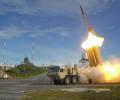
The US has reportedly depleted nearly half of its advanced missile-defence interceptors while defending Israel during recent hostilities with Iran, raising concerns about future readiness.

US Secretary of State Marco Rubio met with Pakistan's Foreign Minister Ishaq Dar amid American demand that countries mediating the peace talks with Iran join the Abraham Accords and establish diplomatic and economic ties with Israel.
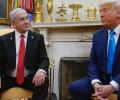
A media report suggests the US and Israel considered installing Mahmoud Ahmadinejad as Iran's president as part of regime change plans.
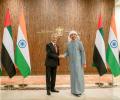
Frankly, was it really necessary in the middle of a fratricidal war for External Affairs Minister S Jaishankar to travel to Abu Dhabi for a one-on-one with the sheikh on April 12?Or, for National Security Advisor Ajit Doval to follow up on April 26? Or, for PM Narendra Modi to follow through today? There are no easy answers, notes Ambassador M K Bhadrakumar.
US President Donald Trump on Sunday said that the Israeli strikes on Lebanon's capital of Beirut "should not have happened", warning that such escalation could jeopardise the peace agreement with Iran to achieve a complete solution to the West Asia conflict, which, according to him, is within reach.

Former Australia all-rounder Moises Henriques, born in Madeira, will captain Portugal in their bid to qualify for the Twenty20 World Cup for the first time, leading a 14-man squad in the Europe Sub-Regional Qualifier C in Finland.

The advisory follows recent developments, including Israeli airstrikes targeting central and western Iran.

'India was the emirate's largest international source market by hotel guest volume.'

If India does get $100 billion a year in FDI, it would be a game-changer in every possible way. FPIs would come rushing back, AI or no AI, points out Debashis Basu.

Irish footballers, celebrities and campaigners have urged the FAI to boycott UEFA Nations League matches against Israel, citing the Gaza conflict and alleged breaches of FIFA and UEFA statutes.

US President Donald Trump has announced the cancellation of a planned attack on Iran, contingent on Tehran agreeing to rapidly open the Strait of Hormuz and end its nuclear programme. This decision follows appeals from Middle Eastern countries and includes Israel's commitment, though Iran had previously warned against any "adventurous action" from the US.

Spiritual leader Sadhguru Jaggi Vasudev has expressed profound anguish over a devastating flash flood near the Tibet-Nepal border, stating that 77 members of an Isha Foundation Kailash pilgrimage group are unaccounted for after the disaster struck the Gyirong area in Tibet.

A top Iranian official has blamed the US and Israel for the disruption of global supply chains due to the West Asia conflict, stating that Tehran is not happy about the consequences faced by countries like India.

A new Pew Research survey reveals that a significant majority of Indians (54%) consider Pakistan their greatest geopolitical threat, while 43% of Pakistanis view India as theirs, highlighting deep-seated distrust between the two nations.

Students at Stanford University staged a walkout during Google CEO Sundar Pichai's commencement address, protesting the company's ties with the Israeli government, particularly its Project Nimbus cloud-computing deal.
'It beggars belief that Saudi Arabia would deploy military force against India, a top partner and market.'

US Vice-President J D Vance's unexpected phone call to Prime Minister Narendra Modi on August 8 has ignited speculation about a potential diplomatic overture, possibly seeking India's support amidst the escalating US-Iran conflict and a shifting global power landscape, suggests Ambassador M K Bhadrakumar.
The IRGC is the most powerful branch of Iran's armed forces and operates independently of the country's regular military, answering directly to Supreme Leader Ali Khamenei.

US Vice President JD Vance has accused 'certain elements' within the Israeli government of attempting to manipulate American public opinion to prolong the conflict with Iran 'indefinitely', according to a Wall Street Journal report.

Israel's Defence Minister Israel Katz has stated that Israel is prepared to escalate military action against Iran, pending approval from the United States. This comes as US President Donald Trump says he would not use nuclear weapons in any conflict with Iran, while also claiming the US has 'total control' over the Strait of Hormuz.

One in 10 employees at California-headquartered technology unicorns now work from India, surpassing other major US tech hubs and several countries, driven by US visa restrictions and substantial cost savings.

US President Donald Trump has reportedly urged Israeli Prime Minister Benjamin Netanyahu to withdraw Israeli military units from southern Syria and Lebanon, warning that Israel's continued presence could escalate regional tensions.

Israeli police have arrested a 31-year-old national in connection with the murder of a 40-year-old Indian man found dead in Jerusalem, prompting a full-scale criminal investigation.

Two commercial vessels, an oil tanker and a cargo ship, carrying a total of 22 Indian nationals, were hijacked by armed pirates in separate incidents off Yemen and Somalia. All Indian crew members on both vessels are reported to be safe, according to the latest information from the shipping ministry and the External Affairs Ministry.
